

SCAQMD Rule 1403
Asbestos
Demolition & Renovation Notifications, Jobsite Documentation & Compliance
If you’re planning demolition, renovation, or major repair work in Riverside County or anywhere in the South Coast AQMD jurisdiction, Rule 1403 is often the rule that causes unexpected delays—especially when projects begin before asbestos documentation is complete.
SCAQMD Rule 1403
Rule 1403 exists to limit asbestos emissions from demolition and renovation activities by requiring specific work practices and documentation. South Coast Air Quality Management District publishes Rule 1403, the associated forms, and the online notification system.
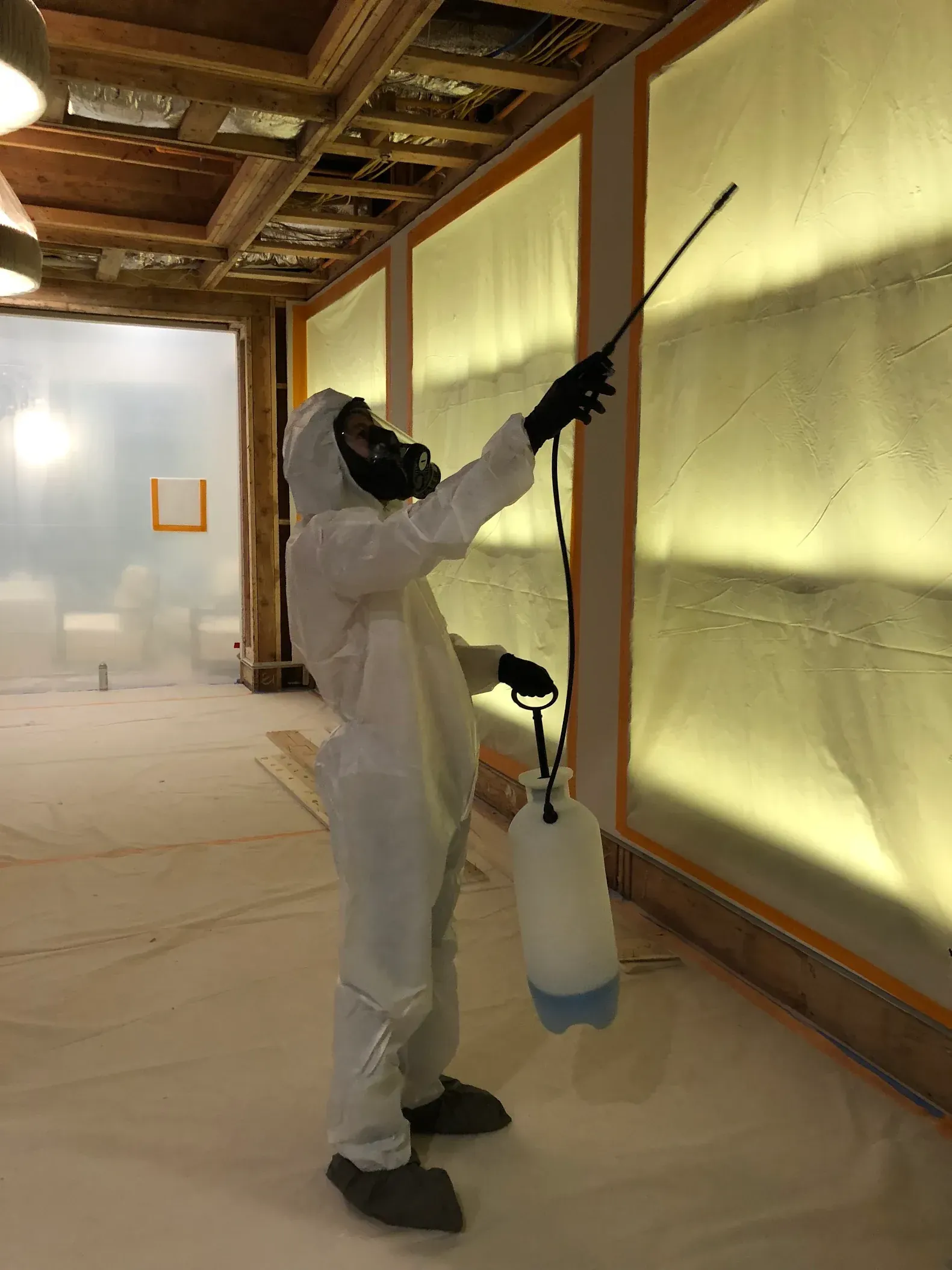
This page explains, in plain terms: what Rule 1403 is and when it applies, how the notification timeline works, what should be available on-site, how Rule 1403 ties into city demolition permits, and common pitfalls that lead to stop-work issues.
Important: This is informational, not legal advice. The right approach depends on your exact scope, building type, location, and the materials being disturbed.
CERTIFIED & Recommended




What Rule 1403 Covers
Rule 1403's stated purpose is to specify work practice requirements to limit asbestos emissions from demolition and renovation activities, including removal or disturbance of asbestos-containing materials (ACM).
Common misconception: Rule 1403 is not a “permit.” The district requires a notification (and compliance with work practices) rather than issuing an asbestos or demolition permit.
Building age doesn't determine the requirement. Rule 1403 applies based on the activity (demolition/renovation) and the materials being disturbed—not the age of the building. While asbestos was most commonly used in construction materials through the early 1980s, ACM has been found in buildings of various eras. The trigger is the scope of disturbance, not the year the structure was built. See the exact rule language below ↓
Exact Rule Language — SCAQMD Rule 1403
Survey Requirement — Section (d)(1)(A)(i)
“The affected facility or facility components shall be thoroughly surveyed for the presence of asbestos prior to any demolition or renovation activity. The survey shall include the inspection, identification, and quantification of all friable, and Class I and Class II non-friable asbestos-containing material, and any physical sampling of materials.”
Facility Definition — Section (c)(18)
“FACILITY is any institutional, commercial, public, industrial or residential structure, installation, building; any ship; and any active waste disposal site. A facility is subject to this rule regardless of its current use or function.”
Only Survey Exemption — Section (j)(10)
“The survey requirements of subparagraph (d)(1)(A) shall not apply to renovation activities of residential single-unit dwellings in which less than 100 square feet of surface area of ACM are removed or stripped.”
No age-based exemption exists. Section (j) Exemptions contains no exception based on construction date, building age, or year built. The survey is required “prior to any demolition or renovation activity” for any “facility”—full stop.
The Compliance Sequence That Prevents Project Delays
The most helpful way to understand Rule 1403 is to think in the same “order of operations” that Building & Safety and inspectors expect to see.
SCAQMD's own Rule 1403 instructions lay out a simple demolition flow: Asbestos Survey → Asbestos Removal (if needed) → SCAQMD Notification → Building & Safety demolition permit.
Asbestos testing (identify suspect materials)
Before demolition (and often before major renovation scopes), you need asbestos testing or a sampling plan appropriate to the materials that will be disturbed. Testing confirms whether asbestos was detected in the specific materials sampled.
Removal/abatement planning (if ACM is confirmed)
If ACM is present and disturbance is planned, the scope must be handled properly by qualified parties as required. If the project involves removal or disturbance of additional suspect materials, an expanded project-specific assessment may be required to define the full abatement scope.
Rule 1403 notification (online, in most cases)
SCAQMD states that Rule 1403 removal/demolition notifications must be submitted through their web-based application, with specific procedures and online payments.
City/county demolition permit (separate from air district notification)
Building departments often tie permit issuance to having the air district paperwork in place. The Rule 1403 notification form itself says to keep copies for records, to post at the worksite, and to obtain a city demolition permit, referencing California Health & Safety Code 19827.5.
Notification Timing
The #1 Schedule Killer
The Rule 1403 FAQ states that electronic notification is required 10 working days (or 14 calendar days) prior to demolition.
What That Means in Real Life
You can have a contractor ready, a dumpster scheduled, and a demolition permit pending—yet still be blocked if the notification timeline hasn't been satisfied. “We'll just start and figure it out” is the path that causes stop-work and expensive rework.
Are There Exceptions?
There are emergency concepts and special procedures, but those are situation-specific and should be handled carefully (with the correct documentation). SCAQMD publishes procedure guidance for certain scenarios.
Negative Results ≠ No Notification
SCAQMD's Rule 1403 Web App is used to submit both demolition notifications and asbestos removal notifications. Negative asbestos sampling results can help you avoid abatement steps and the associated costs—but if the project is classified as a demolition, the air district must still be notified prior to the start of any demolition, whether or not the survey identified ACM. Your negative sampling report becomes part of the compliance documentation that demonstrates pre-project due diligence was completed.
At a bare minimum, have your negative results on hand. Even when no ACM is found, having documented sampling results available on the jobsite helps prevent project pauses during inspections, drive-by verifications, or when a building department asks for asbestos documentation as part of the permitting workflow. A negative report is still a compliance document—it shows the due diligence was done.
Rule 1403 Compliance
Avoid Project Delays
If your Riverside County project could trigger Rule 1403, we help you reduce delays by focusing on what inspectors and building departments expect: asbestos testing documentation, clear scope language, and jobsite-ready documentation.
Jobsite Documentation
Why “Drive-By Verification” Happens
Projects that are visible from the street often attract attention—especially demolition and major renovation scopes. Rule 1403 materials explicitly reference keeping copies for records and posting at the worksite, and the notification form requires that copies of the notification and asbestos survey report be kept at the worksite during the project.
What Should Be On-Site (When Applicable)
This is the checklist that prevents most friction:
- Asbestos survey / sampling documentation and lab results
- Rule 1403 notification confirmation + project schedule details
- Scope notes showing which materials are being disturbed
- Waste handling documentation (when asbestos-containing waste material is involved)
- Building department permit documentation aligned with the active scope
Rule 1403 Web App
How Notifications Are Typically Filed
SCAQMD publishes a Rule 1403 Notification Web Application that requires notifications to be submitted through their online system, with payments and processing occurring through established online procedures. For contractors and new users, SCAQMD also provides step-by-step registration materials for web app access and authorization.
Homeowner vs. Contractor Filing
SCAQMD's instructions include homeowner-specific pathways in certain cases and contractor instructions referencing the web app. We recommend verifying which filing method applies to your project type and who is legally responsible for filing.
Fees & Cost Triggers
SCAQMD publishes fee information for asbestos notifications under Rule 301(o). Fees can change over time, revisions can change fee tiers, and inaccurate project sizing can cause delays or corrections.
Contractor Requirements (Cal/OSHA ACRU)
If ACM is confirmed and asbestos-related work is required, California has additional contractor requirements managed through Cal/OSHA's ACRU program. If asbestos is confirmed in a sampled material and the project involves removal or disturbance, an additional project-specific assessment may be required to define the abatement scope, work practices, and documentation needed for compliance.
For more on asbestos testing, bulk sampling methods, and how testing results feed into the Rule 1403 compliance workflow, see our Asbestos Testing page.
Common Compliance Pitfalls
Starting demo before the notification waiting period is satisfied
Fix: Treat notification timing as a critical path item—like permitting.
No asbestos survey documentation on site
Fix: Keep a printed or accessible copy of the survey and results where the site supervisor can produce it quickly.
Project dates change and the paperwork doesn’t match the active schedule
Fix: If dates shift, update processes properly—don’t just “keep working.”
Confusing city permits with air district notification
Fix: Your city/county permit is not the same as Rule 1403 notification. Treat them as two parallel compliance lanes that must both be satisfied.
Assuming negative asbestos results eliminate the demolition notification
Fix: Negative results can help avoid abatement steps, but if the project is classified as a demolition, the air district must be notified prior to the start of any demolition—whether or not the survey identified ACM. Your negative report becomes part of the compliance documentation, not a reason to skip notification.
Penalties & Why Documentation Matters
Rule 1403 violations carry significant financial exposure. Because Rule 1403 implements federal NESHAP regulations and addresses a serious health risk, it cannot be waived—even by state executive order during emergencies.
Strict Liability
$5,000
per violation, per day
Negligent
$25,000
per violation
Intentional
$75,000
per violation
Corporate
Up to $1M
willful/reckless + serious injury
How Proper Documentation Protects You
Having sampling results, notification confirmation, and scope documentation on file demonstrates compliance intent and completed due diligence—which matters if a project is ever reviewed or questioned. Rule 1403 requires records to be maintained for at least three years, including:
- Asbestos survey/sampling documentation and lab results
- Air district notification confirmation
- Waste shipment records (when ACM is involved)
- Abatement contractor qualifications and registration
Even negative results help here. A documented negative sampling report shows that testing was performed and that the materials sampled did not contain asbestos. That documentation helps demonstrate the due diligence was done—and can be the difference between a clean inspection and a project-stopping enforcement question. At a bare minimum, have your results on hand and available at the jobsite.
Source: Allen Matkins: Air District Asbestos Rule & Demolition Activities
Frequently Asked Questions
Is Rule 1403 required for every remodel?
Not always. The trigger is tied to demolition/renovation activities and the disturbance/removal context. For projects where you’re disturbing suspect materials, asbestos survey/testing is how you determine what controls and compliance steps are necessary. Start with the scope and the materials being disturbed.
Does Rule 1403 only apply to older buildings?
No. Rule 1403 requirements are based on the activity (demolition/renovation) and the materials being disturbed—not the age of the building. The rule itself states it applies to “any demolition or renovation activity” and that a facility is subject to the rule “regardless of its current use or function.” See the exact rule language above ↑
Does SCAQMD issue asbestos/demolition permits?
No. SCAQMD’s FAQ clarifies they do not issue demolition or asbestos permits—they require notification under Rule 1403.
Do I need paperwork on the jobsite?
Yes, where applicable. Rule 1403 notification materials and the form emphasize keeping copies for records and posting/keeping at the worksite and for city demolition permitting workflows.
What if asbestos is confirmed in one of my samples?
If asbestos is confirmed in a sampled material and the project involves removal or disturbance, an additional project-specific assessment may be required to define the abatement scope, work practices, and documentation needed for compliance. Our initial bulk testing results feed directly into that next step.
If my samples come back negative, do I still need to file a Rule 1403 notification?
It depends on the project classification. Negative results can help you avoid abatement steps—but SCAQMD’s Rule 1403 system is used for both demolition notifications and asbestos removal notifications. If the project is classified as a demolition, the air district must be notified prior to the start of any demolition, whether or not the survey identified ACM. Your negative sampling report becomes part of the compliance documentation that demonstrates pre-project due diligence was completed.
How RCR Environmental Helps
If your project in Riverside County could trigger Rule 1403, we help you reduce delays by focusing on what inspectors and building departments expect. We serve Murrieta, Temecula, Menifee, Wildomar, Winchester, Canyon Lake, and surrounding communities throughout Southwest Riverside County.
Official Resources & References
Rule 1403 Official Guidance
Notification & Forms
Emergency / Special Procedures
Cal/OSHA ACRU
Enforcement & Legal Context
Related Services
Rule 1403 compliance connects to broader project planning. Explore our related services.
Asbestos Testing
Bulk material sampling and lab analysis to confirm whether suspect materials contain asbestos—the first step in the Rule 1403 compliance workflow.
Mold Testing
Lab-certified air, surface, and wall cavity sampling when mold may also be a concern during renovation or demolition projects.
Water Damage Restoration
When water damage leads to demolition and material removal, asbestos testing and Rule 1403 compliance may be part of the scope.