

Mold Abatement &
Removal
Professional Mold Remediation & Surface Treatment
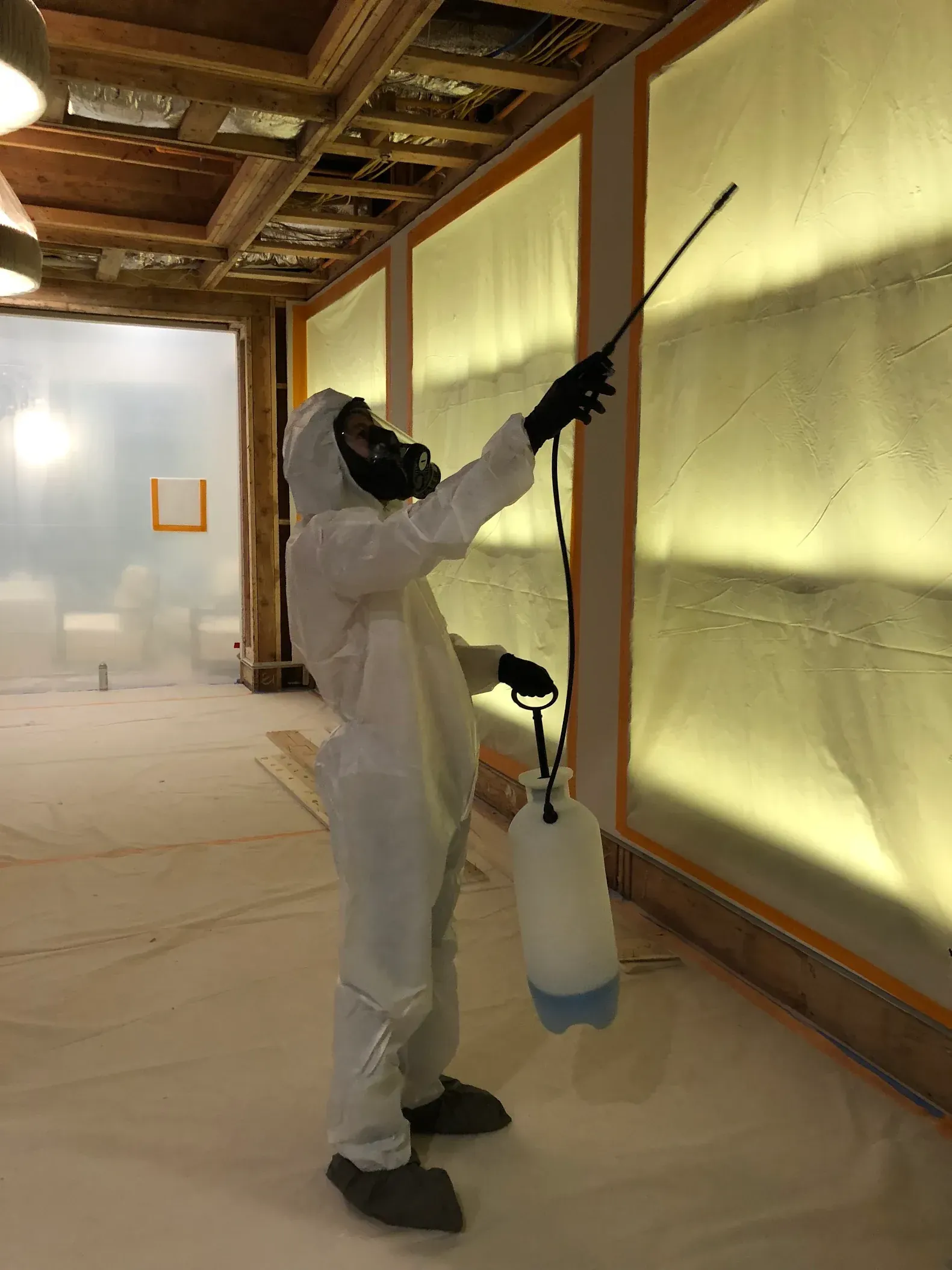
Targeted removal of mold-affected materials and surfaces using controlled processes. We eliminate active growth, remove contaminated materials, and treat structural surfaces with advanced rapid mold removal agents.
Mold Abatement & Removal
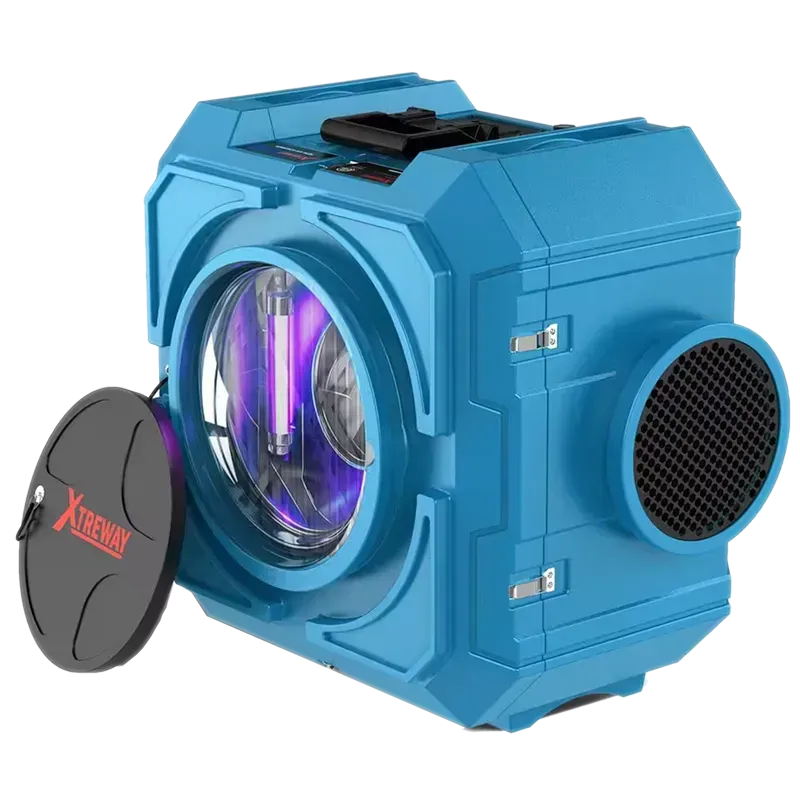
Mold abatement addresses active contamination through controlled removal of affected porous materials and intensive cleaning of structural surfaces within a contained work zone with negative air pressure. This isn't surface cleaning—it's systematic elimination of growth at its source.
Depending on the severity, this could be a dual-step service that starts with the direct application of a mold remover on affected surfaces such as wood, concrete, and drywall, followed by a neutralizer to treated areas that effectively removes lingering odors and restores a clean indoor atmosphere.
CERTIFIED & Recommended





When Mold Abatement Is Needed
Mold abatement is the active removal and treatment phase of remediation. It's required when mold has colonized building materials and surface cleaning alone won't resolve the contamination.
Visible Active Growth
When mold is actively growing on walls, ceilings, or structural materials, removal is necessary to eliminate the source and prevent further spread.
Porous Material Contamination
Drywall, insulation, carpet, and ceiling tiles often cannot be adequately cleaned and require physical removal and replacement.
Hidden Cavity Growth
Mold inside wall cavities, under flooring, or behind cabinets requires controlled access, removal, and treatment of underlying structures.
Odor and Air Quality Impact
Removal eliminates the source of musty odors and reduces airborne spore levels, restoring healthier indoor air quality.
Dual-Step Treatment Process
Depending on the severity of contamination, our abatement process may include a dual-step treatment that addresses both active mold growth and residual odors.
Step 1: Mold Remover
- Direct application to affected surfaces (wood, concrete, drywall)
- Targets and eliminates mold growth at its source
- Penetrates porous surfaces for thorough treatment
- Effective on structural framing, joists, studs, and sheathing
Step 2: Neutralizer
- Applied to treated areas after mold removal
- Effectively removes lingering musty odors
- Restores a clean and fresh indoor atmosphere
- Supports ongoing mold management and prevention
What Mold Removal Includes
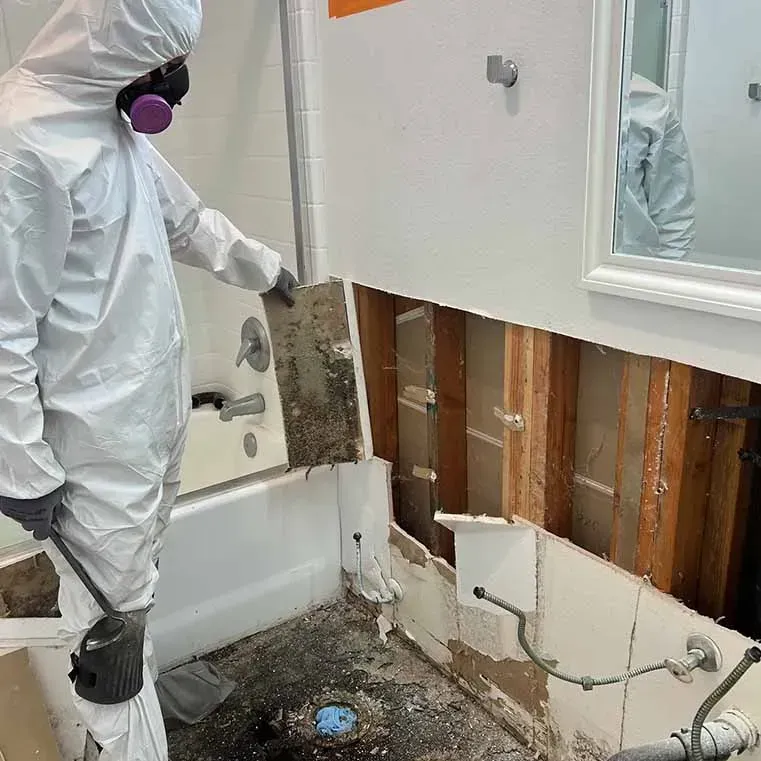
Physical removal of contaminated porous materials
Drywall, insulation, baseboards, carpet, and ceiling tiles with significant growth are carefully removed and sealed in bags for disposal.
Application of rapid mold removal agents
Advanced mold removal products are applied directly to structural surfaces — wood framing, concrete, studs, joists, and sheathing — to eliminate growth at its source.
Controlled handling to prevent dispersal
All removal work is done within containment, with controlled handling procedures and HEPA vacuuming to minimize airborne spore release.
Odor neutralization treatment
A neutralizer is applied to treated areas to remove musty odors embedded in structural materials, restoring a clean indoor atmosphere.
Material Assessment: Remove vs. Treat
Not all materials respond to cleaning the same way. The decision to remove or treat depends on the material type and the extent of contamination.
Porous (Remove)
Drywall, insulation, carpet, upholstery, ceiling tiles, and cardboard. These materials absorb moisture and mold growth penetrates beyond the surface, making cleaning ineffective.
Semi-Porous (Treat)
Wood framing, concrete, masonry, and OSB sheathing. These can typically be cleaned and treated with mold removal agents when contamination is surface-level.
Non-Porous (Clean)
Metal, glass, plastic, tile, and sealed surfaces. These do not absorb moisture or mold and can be effectively cleaned with appropriate methods.
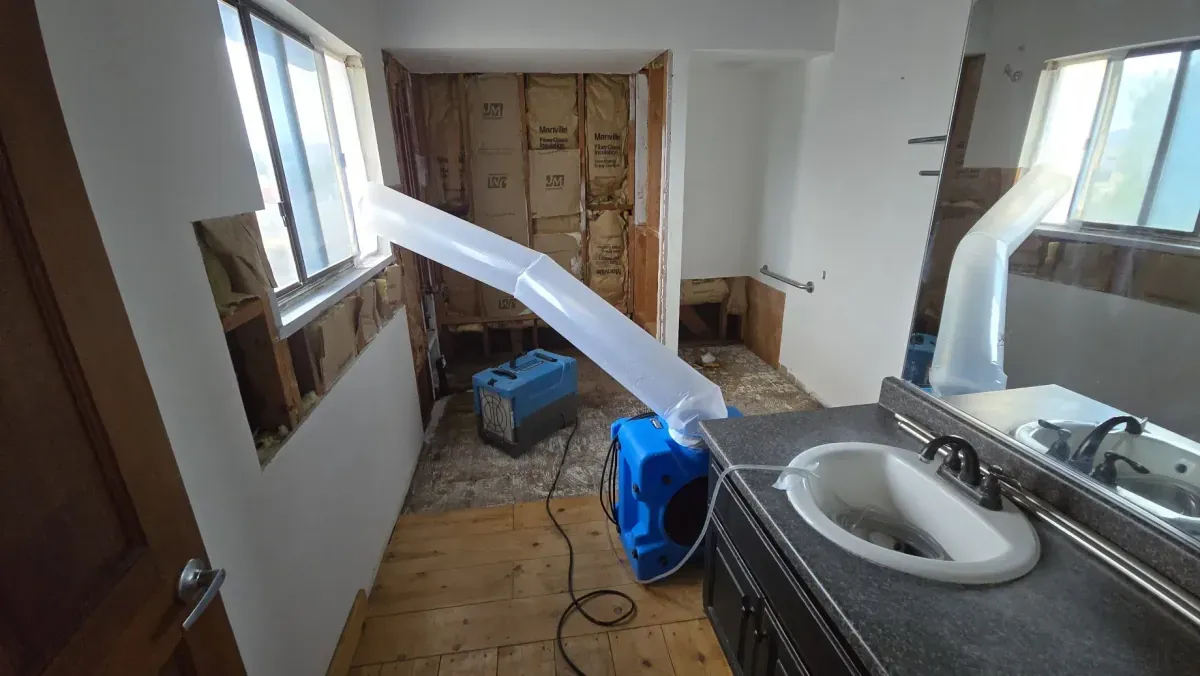
Professional Mold Removal
Eliminate Mold at Its Source
Our mold abatement process resolves immediate mold concerns and supports ongoing mold management. From surface treatment to full material removal with proper disposal, followed by clearance testing to verify the work was effective.
Frequently Asked Questions
What materials can be saved vs. removed?
Non-porous materials (metal, glass, tile) and semi-porous materials (wood, concrete) can usually be cleaned and treated. Porous materials like drywall, insulation, carpet, and ceiling tiles with significant mold growth typically require removal and replacement.
What products do you use for mold removal?
We use EPA-registered rapid mold removal agents applied directly to affected surfaces. For dual-step treatments, a mold remover targets active growth on wood, concrete, and drywall, followed by a neutralizer that eliminates lingering odors and supports ongoing mold management.
How do you prevent spreading mold during removal?
Containment barriers, negative air pressure, controlled handling, sealed bagging, and HEPA vacuuming all work together to minimize cross-contamination during the removal process. Materials are sealed before leaving the containment zone.
Can mold come back after removal?
If the moisture source is corrected and removal is thorough, recurrence is unlikely. Addressing the underlying water or humidity problem is critical to long-term success. We provide guidance on moisture control as part of every project.
Other Remediation Phases
Mold abatement is the core removal phase. It works alongside other steps to deliver complete remediation.
Containment Area Setup
Physical barrier construction to isolate the work zone during active mold removal.
Negative Air Pressure
HEPA-filtered airflow control to prevent spore migration during abatement work.
Dehumidification & Drying
Moisture removal from air and structures to prevent mold regrowth after abatement.
Antimicrobial Decontamination
Whole-home atomized treatment to neutralize residual contamination after removal.
Transport & Disposal
Safe handling and compliant disposal of mold-contaminated materials.
Post-Remediation Clearance
Lab-certified verification that mold removal achieved the intended result.
Related Services
Mold abatement is one part of a comprehensive remediation approach. Explore our related services.
Mold Remediation
Full remediation process from assessment through clearance — mold abatement is the core removal phase of every project.
Mold Inspection
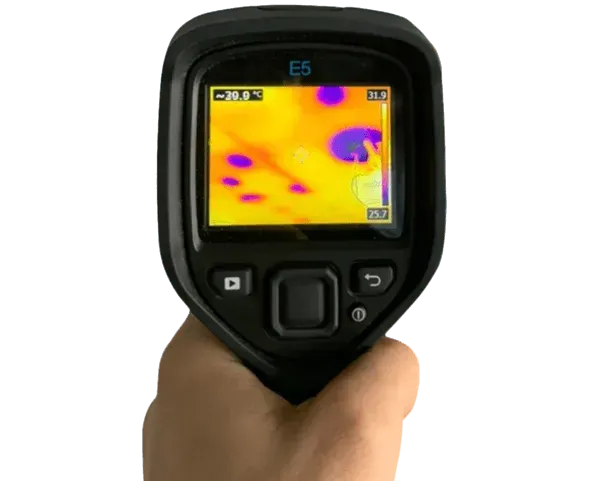
Visual assessment, infrared screening, and moisture verification to identify the scope before abatement begins.
Mold Testing
Lab-certified sampling to identify mold types, concentrations, and the extent of contamination before and after removal.