

HVAC & Duct
Decontamination
Your HVAC Can Spread What You Can’t See
If mold odor or symptoms appear when your HVAC runs and fade when it cycles off, the system may be distributing contamination to every room it serves. HVAC decontamination targets the source pathways inside your system — not just the surfaces you can see.
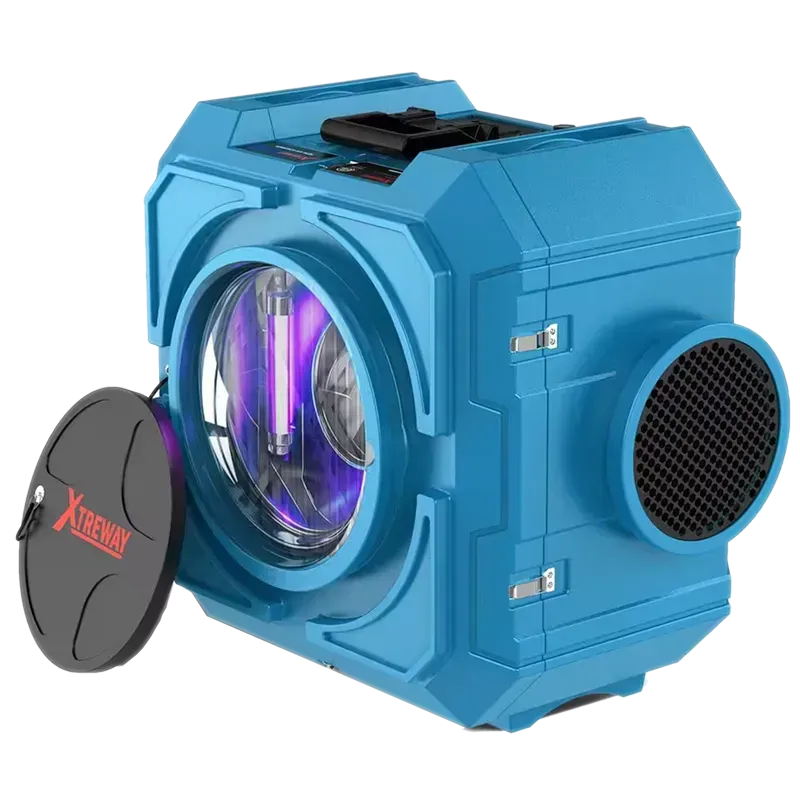
Your HVAC System Can Become a Delivery Vehicle
When mold contamination occurs near return registers or inside wall cavities connected to ductwork, your HVAC system can become the primary distribution pathway—pulling contaminated air from affected zones and delivering it to every room in the house.
This is why room-level remediation sometimes doesn't resolve the problem. The source may be cleaned, but the system that carried those particles—ductwork, plenums, the air handler—still holds residue. Without addressing the HVAC system, odors can persist, symptoms can continue, and clearance testing may not reflect the full picture. HVAC decontamination is typically coordinated with containment, drying, whole-home decontamination, or mold abatement depending on site conditions.
CERTIFIED & Recommended






When HVAC Decontamination Makes Sense
Not every remediation project requires HVAC work. But when the system is part of the contamination pathway, skipping it can undermine everything else.
Odor Tracks With System Runtime
If a musty or moldy smell appears or gets stronger when the HVAC runs and fades when it cycles off, the system is likely distributing contamination from inside the ductwork or air handler.
Return Registers Near Affected Zones
Return registers create suction that pulls air from surrounding spaces. If a return is near or inside a mold-affected area, contaminated air enters the system and circulates to every room.
Post-Remediation Symptoms Persist
If odor or allergy symptoms return after room-level remediation, the HVAC system may be reintroducing particulate that settled in the ductwork during the original contamination event.
Visible Contamination Inside Ducts
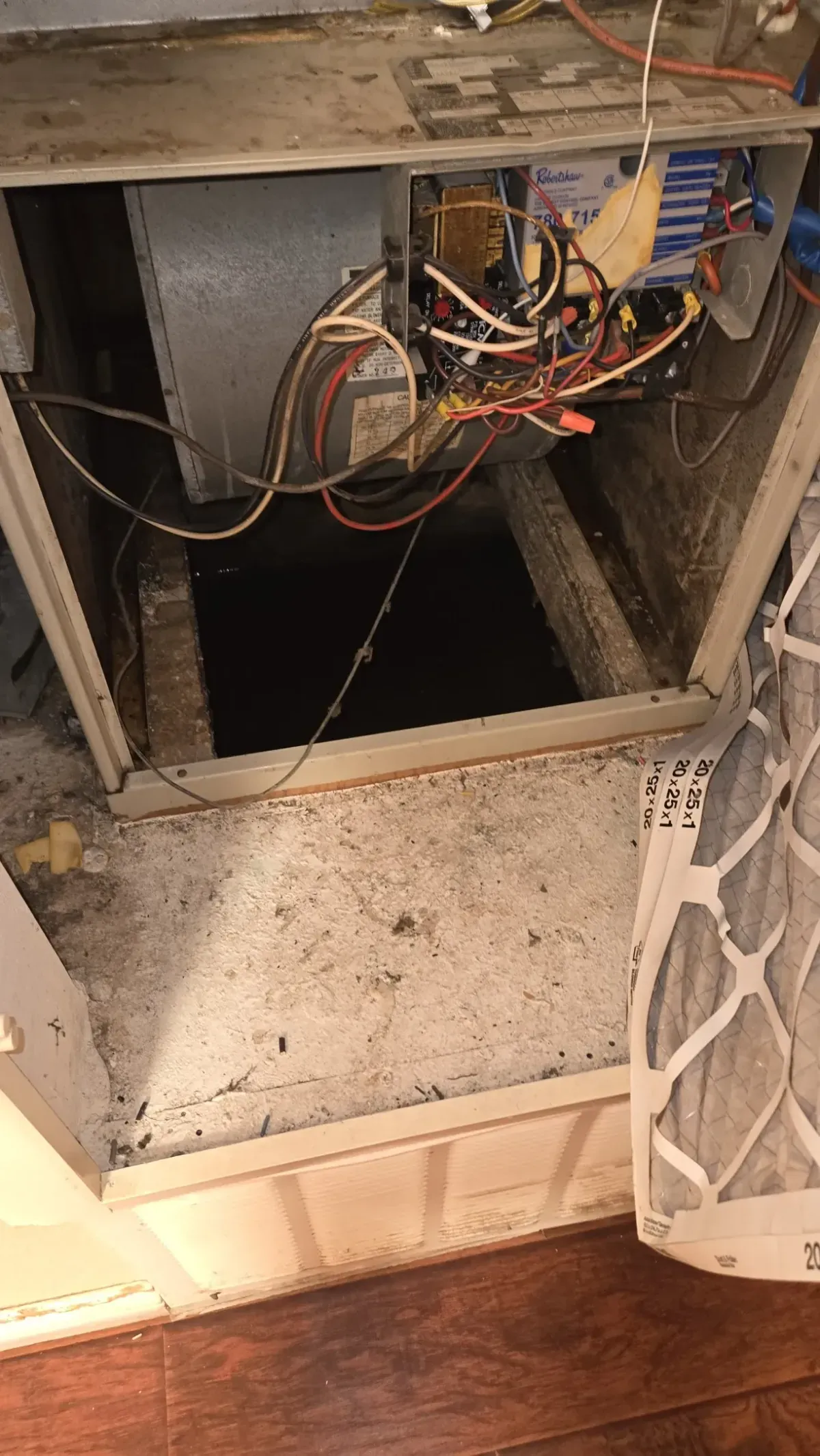
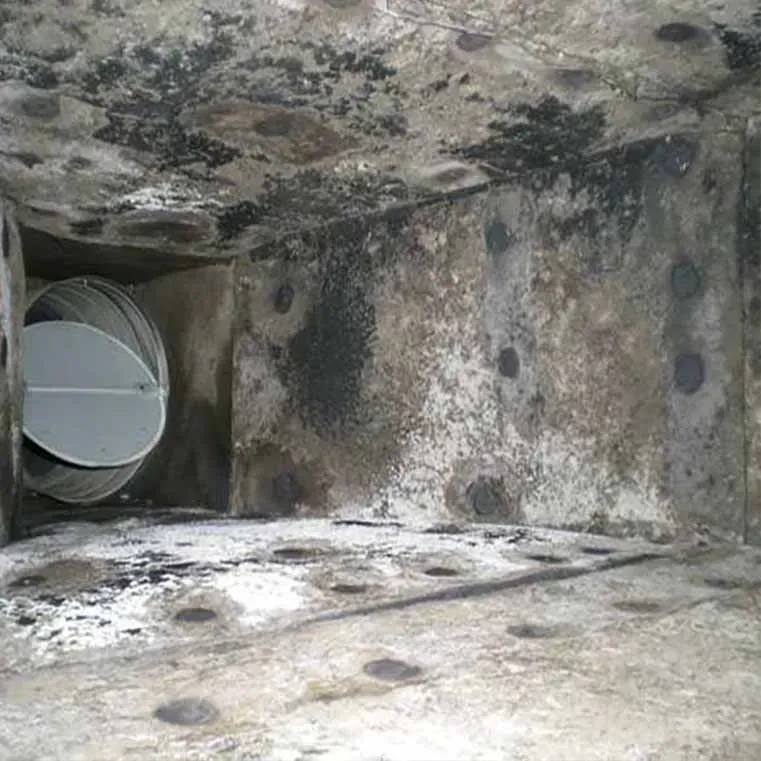
If inspection reveals dust, debris, or suspect growth on interior duct surfaces, supply boots, or the air handler, decontamination is warranted before the system is used again.
Targeted Antimicrobial Treatment for HVAC Interiors
HVAC decontamination is not standard duct cleaning. It's a remediation-level intervention designed to address microbial contamination inside the system—ductwork, supply and return runs, plenums, and the air handler—using methods that go beyond brush-and-vacuum.
Standard Duct Cleaning
- ×Brush-and-vacuum approach focused on loose debris
- ×Does not address microbial contamination
- ×No containment or air control procedures
- ×Not designed for remediation scenarios
HVAC Decontamination
- Targeted cleaning of contaminated surfaces inside ducts, registers, and air handler
- Antimicrobial treatment of cleaned surfaces where appropriate
- HEPA vacuuming and controlled handling to prevent cross-contamination
- Coordinated with room-level remediation and clearance
HVAC Decontamination Done Right
System assessment and access planning
We start with a professional inspection to identify which sections of the system are affected, locate access points, and plan the decontamination sequence based on system layout and contamination pathways.
Interior cleaning of ducts, registers, and air handler
Contaminated surfaces are cleaned using methods designed for microbial remediation—not just dust removal. Supply and return runs, boots, plenums, and the air handler are addressed as needed with containment in place when conditions require it.
HEPA filtration and antimicrobial treatment
Loose material is removed under HEPA-controlled conditions to prevent redistribution. Cleaned surfaces receive an antimicrobial application where appropriate to reduce the likelihood of recolonization.
Coordination with broader remediation
HVAC decontamination is sequenced with the broader project—typically after containment and source work is complete, coordinated with drying when moisture is a factor, and before clearance testing.
How Your HVAC System Distributes Mold
Understanding how your HVAC system can spread contamination helps explain why room-level remediation sometimes isn't enough—and why the system itself needs to be addressed.
Return-Side Pull
Return registers create suction that pulls air from surrounding spaces. If a return is near or inside an affected area, contaminated air enters the system and circulates to every room.
Supply-Side Distribution
Once inside the system, particulate settles on interior duct surfaces and can be redistributed every time the system cycles — even after the original source has been addressed.
Passive Duct Leakage
Leaks at duct joints, disconnected runs in attics or crawlspaces, and poorly sealed boots allow contaminated air to enter or exit the system in uncontrolled ways.
HVAC Decontamination
Address the System, Not Just the Room
When your HVAC system is part of the contamination pathway, room-level remediation alone won't resolve the issue. Let us evaluate your system and determine if HVAC decontamination should be part of your remediation plan.
Why RCR Environmental
HVAC decontamination is only effective when it's part of a properly sequenced remediation plan. With RCR Environmental, you get:
- An assessment that determines whether HVAC involvement is real — not assumed
- Remediation-grade cleaning, not consumer-level duct brushing
- Proper sequencing: containment and source remediation before system treatment
- Coordination with drying, decontamination, and clearance testing as a complete project
- Local experience with Riverside County HVAC configurations (attic units, closet air handlers, ductwork in crawlspaces)
Frequently Asked Questions
Can my HVAC system spread mold to other rooms?
Yes. If return registers pull air from near a contaminated area, mold spores and odor-causing particles can enter the system and distribute to every room the ductwork serves — even rooms that were never directly affected.
How is HVAC decontamination different from duct cleaning?
Standard duct cleaning uses brush-and-vacuum methods to remove loose dust and debris. HVAC decontamination is a remediation-level intervention that addresses microbial contamination with controlled cleaning, HEPA filtration, and antimicrobial treatment. The scope, purpose, and equipment are different.
Should I run my HVAC during mold remediation?
In most cases, no — running the system during active remediation can spread disturbed particles to clean areas. We typically isolate the system during work and address it as a separate step in the remediation sequence.
Is HVAC decontamination always necessary during remediation?
No. It’s added when the HVAC system is identified as part of the contamination pathway — typically when odor tracks with runtime, returns are near the work zone, or inspection reveals contamination inside the ductwork. We evaluate this during the initial assessment.
Not Sure If HVAC Is the Source?
If you're noticing odors, allergy symptoms, or visible dust around registers but aren't sure whether the HVAC system is involved, start with an inspection. We'll check the system, map moisture, and determine whether HVAC decontamination should be part of the plan.
If the problem turns out to be room-level, we'll recommend the right combination of remediation, drying, and decontamination instead.
Negative Air Pressure
When airflow control is needed to prevent contamination from spreading during HVAC or room-level work.
Whole-Home Decontamination
Antimicrobial treatment for surfaces, contents, and air when contamination extends beyond the HVAC system.
Post-Remediation Clearance
Lab-certified verification after HVAC decontamination and remediation are complete.
Containment Area Setup
Sealed work zones to isolate affected areas and prevent cross-contamination during remediation.
Mold Abatement & Removal
Professional removal of contaminated materials when mold growth is confirmed on building components.
Dehumidification & Drying
Controlled structural drying to remove moisture from building materials and prevent regrowth.
Related Services
HVAC decontamination is one part of a comprehensive approach. Explore our related services.
Mold Remediation
Full remediation process including containment, material removal, and clearance — HVAC decon is coordinated as part of qualifying projects.
Air Quality Testing
Lab-certified air sampling to evaluate whether your HVAC system is contributing to indoor air quality concerns.
Mold Inspection
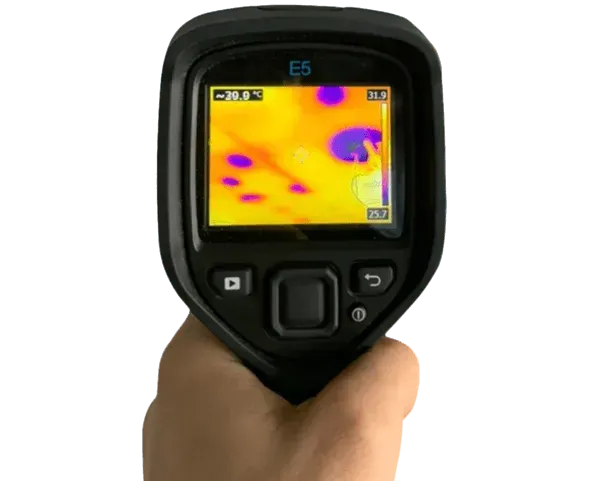
Visual assessment, infrared screening, and moisture mapping to determine whether your HVAC system is part of the contamination pathway.