

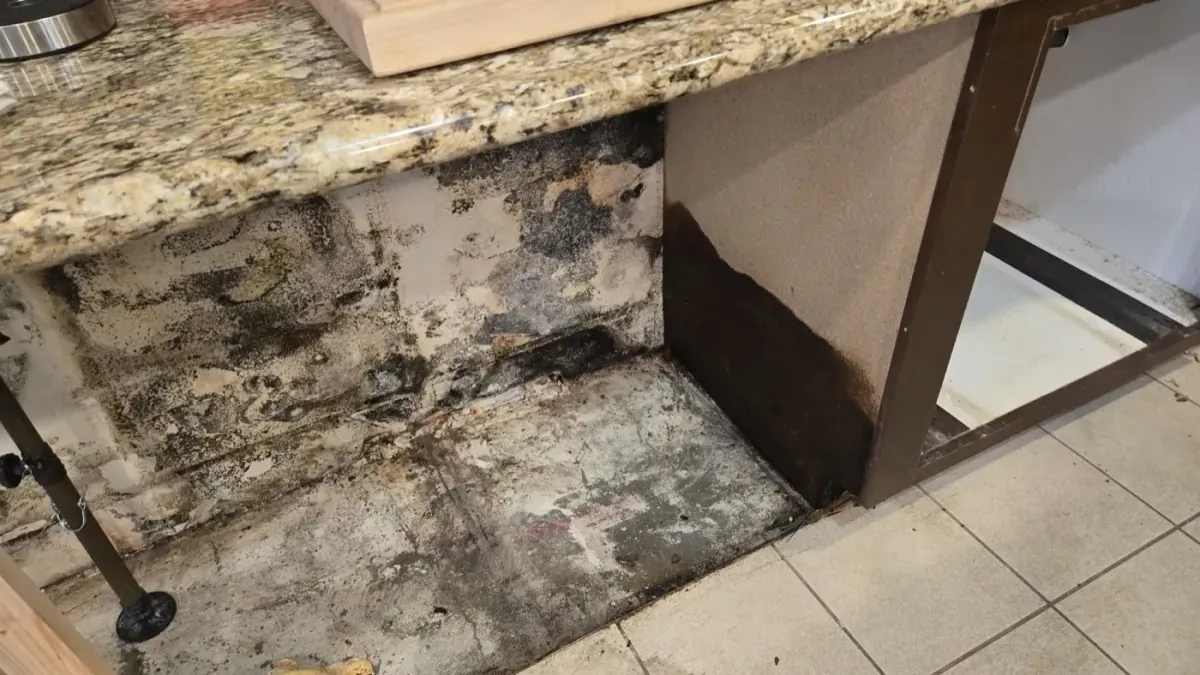
Kitchen Cabinet
Remediation & Rebuild
The Hidden Leak That Ruins Kitchens (and Budgets)
Under-sink leaks, dishwasher supply line failures, and slow drain drips are some of the most common causes of hidden moisture and microbial growth in a home. RCR Environmental provides kitchen cabinet remediation and cabinet box rebuild services—often retaining the existing cabinet faces so you avoid the cost of a full kitchen remodel.
Sink and Dishwasher Leaks Create “Perfect Conditions”
Kitchen cabinets are a high-risk area because they combine plumbing connections (drain traps, supply lines, angle stops), frequent water use and splash zones, enclosed spaces with poor airflow, and materials that don't tolerate moisture well (MDF, particleboard, melamine).
By the time you notice a smell or staining, the cabinet base, toe kick, and wall behind the sink may already be affected. When moisture stays trapped, it can lead to microbial growth and deterioration of the cabinet box—even if the leak seems “minor.” A full kitchen replacement is often unnecessary when the faces and visible finishes are still in good condition.
CERTIFIED & Recommended






Common Warning Signs
These signs often indicate hidden moisture and potential microbial growth inside or behind kitchen cabinets.
Musty Odor When Opening Cabinets
A persistent smell when you open the sink cabinet is one of the earliest indicators that moisture and microbial activity are present behind or underneath the cabinet box.
Swollen or Crumbling Cabinet Floor
MDF, particleboard, and melamine swell, delaminate, or crumble when exposed to persistent moisture—a clear sign the cabinet base has been saturated.
Warped Toe Kick or Dark Staining
Warped or separating toe kicks and dark staining along the back panel indicate moisture has traveled from the leak source into surrounding materials.
Recurring Pests or Soft Drywall
Ants and roaches are often drawn to moisture. Bubbling paint or soft drywall behind the sink is another indicator that water damage extends beyond the cabinet.
Remediate What's Affected, Rebuild What's Damaged, Keep What Still Matches
A full kitchen replacement is often unnecessary when the faces and visible finishes are still in good condition. Our approach is designed to be practical for homeowners who want to protect their kitchen's appearance and fix the problem correctly.
- Correct the moisture-related conditions at the source
- Remove or treat impacted materials as needed
- Dry the assembly properly so problems don’t return
- Rebuild the cabinet box and interior using materials selected to closely match the existing
- Retain the existing cabinet faces whenever feasible for a near-identical look
Kitchen Cabinet Remediation + Rebuild
Identify the source + map the moisture
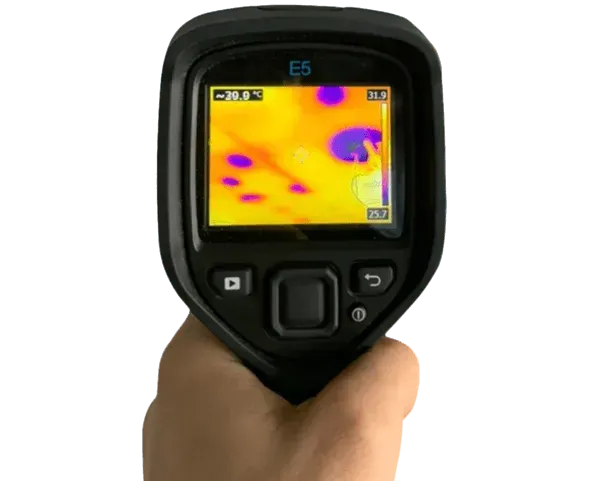
We start by determining what caused the issue and how far it traveled: drain leaks, supply line seepage, dishwasher leaks, disposal failures. We perform moisture screening of the cabinet base, toe kick, adjacent drywall, and flooring, with visual documentation of staining, swelling, and suspect materials.
Controlled remediation of affected areas
Depending on conditions, we remove impacted cabinet base materials and toe kick sections, address affected drywall behind or adjacent to the sink base, and apply antimicrobial treatment to affected structural surfaces. We implement containment/ air controls when conditions warrant, especially when material removal is involved.
Structural drying (when needed)
Cabinet remediation is only successful when the assembly is actually dry. Where moisture is present in framing, subfloor, or wall cavities, we set controlled drying using industrial dehumidification, air movement and access openings, and monitoring to ensure materials taper down toward dry targets.
Cabinet box rebuild with near-identical match
Once remediation and drying are complete, we rebuild the interior cabinet box—replacing the damaged cabinet floor and box panels as needed, using melamine or plywood based on what best fits the existing construction and finish, and matching dimensions, layout, and function so it looks and performs like the original.
Retain existing faces when feasible
In many cases, we keep the cabinet faces and visible exterior finishes. This preserves the kitchen’s look, reduces disruption and cost, and avoids mismatch across the rest of the cabinetry. If faces are swollen, delaminated, or heavily impacted, we’ll tell you upfront and recommend the most practical option.
Kitchen Cabinet Remediation & Rebuild
Real projects showing cabinet damage from under-sink leaks and the rebuild process—retaining original cabinet faces while replacing affected materials.
Under-Sink Cabinet: Water Damage → Rebuild
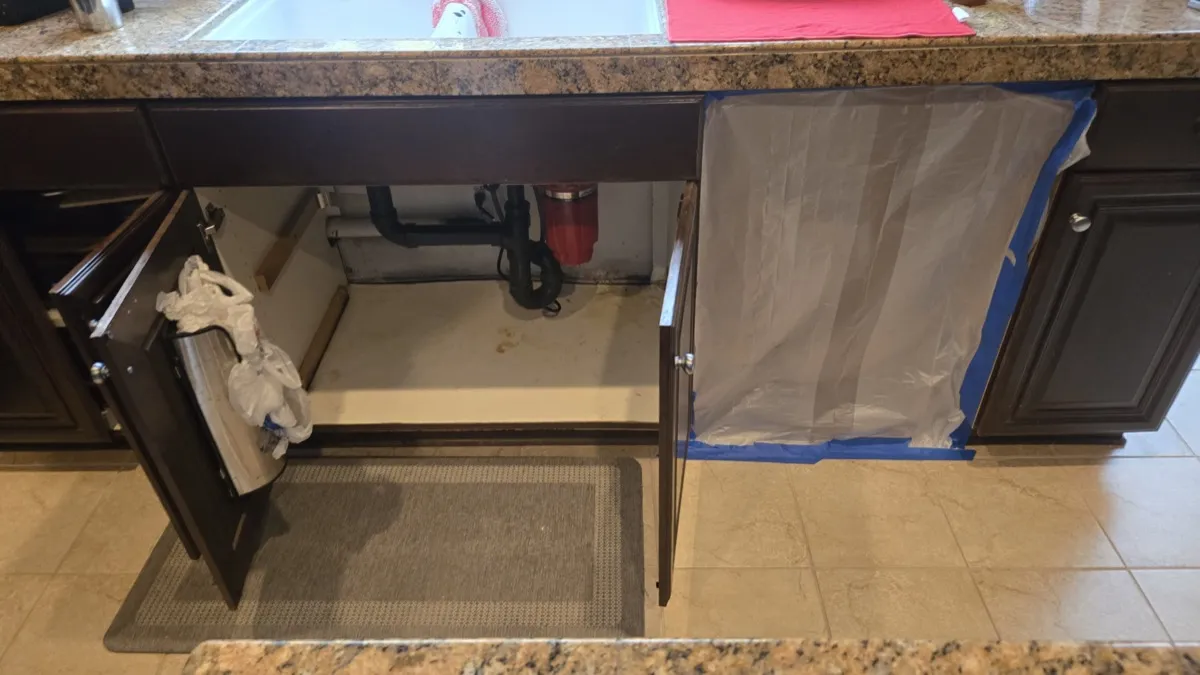
Water-stained cabinet floor with moisture damage to base and adjacent areas
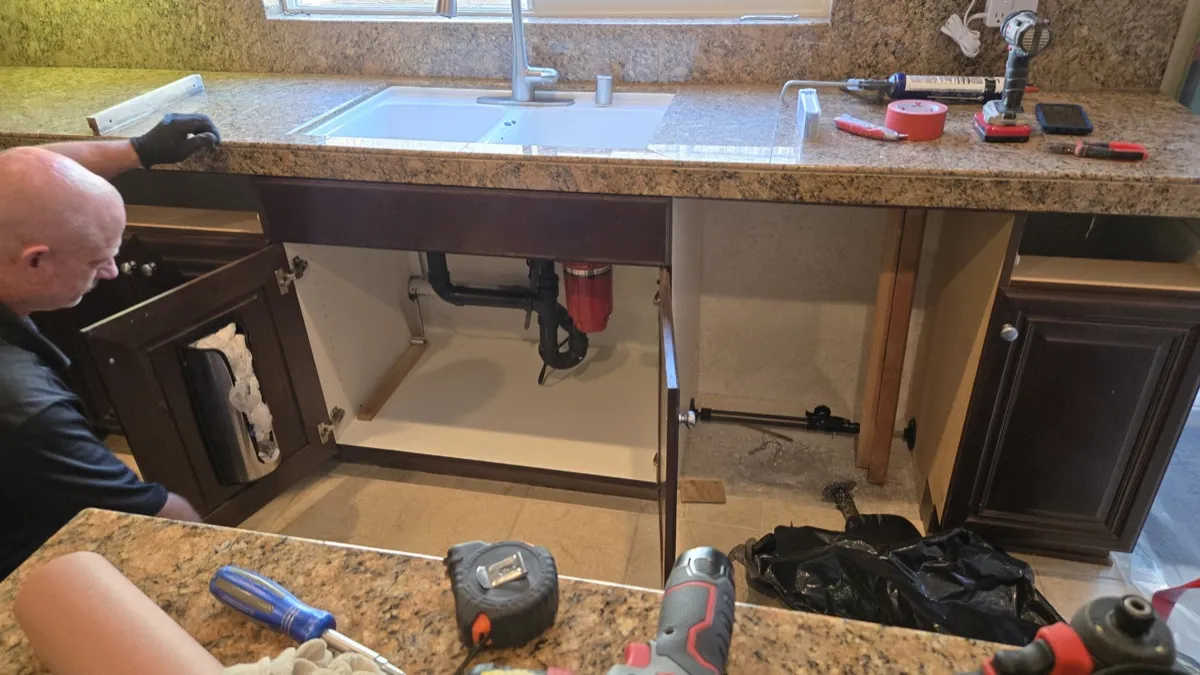
Cabinet box rebuilt with new panels, original faces retained for near-identical match
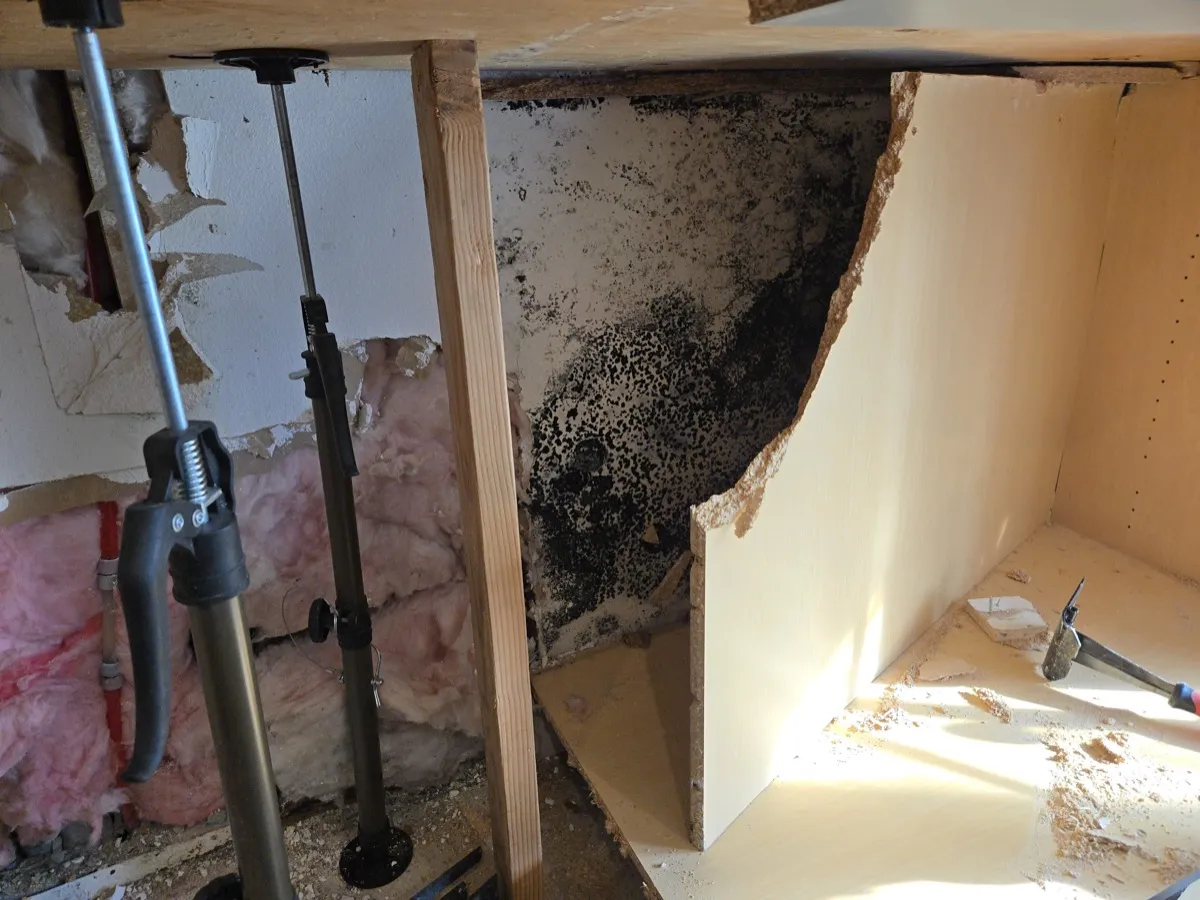
Kitchen Cabinet: Mold Behind Wall → Cabinet Box Rebuild
Significant mold growth on drywall and sheathing behind kitchen cabinet
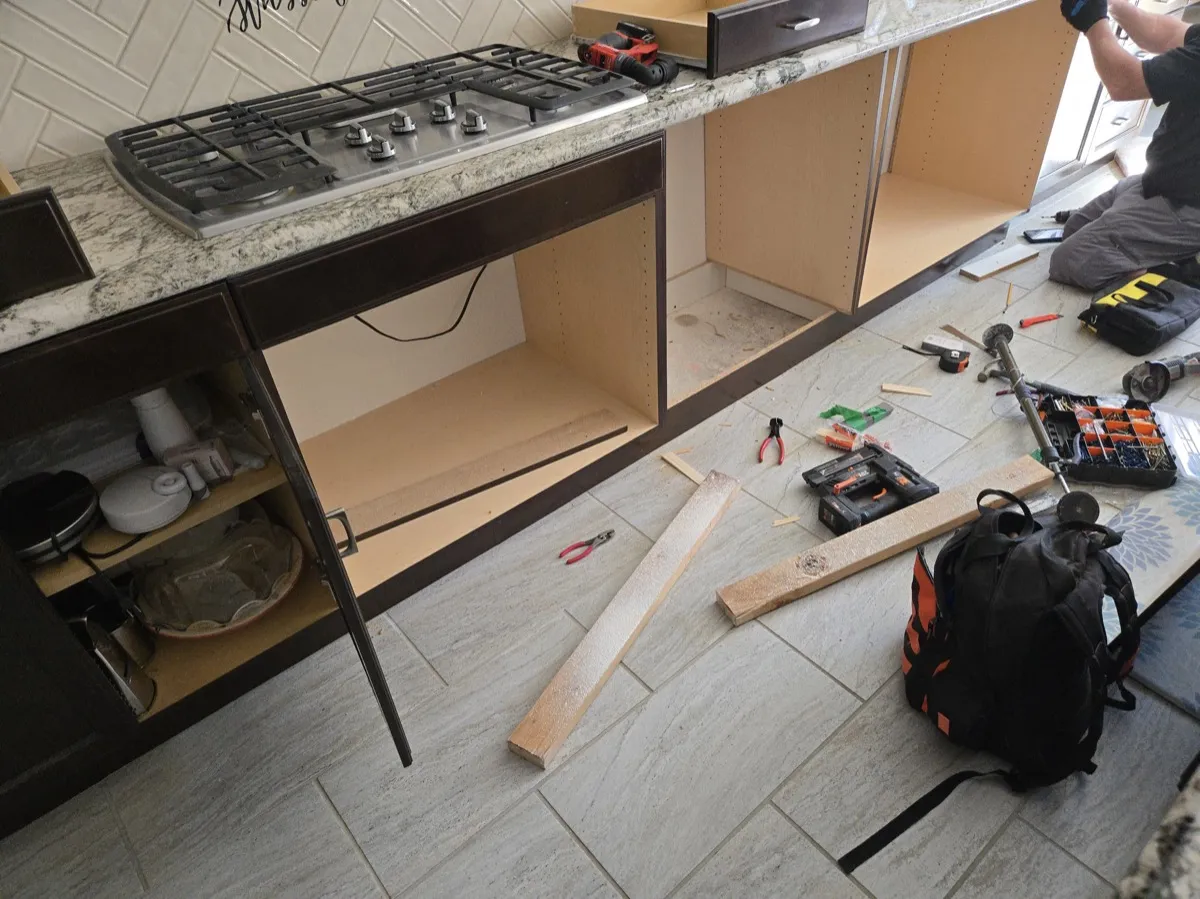
New cabinet box panels installed, matching original construction for a seamless finish
Sink Cabinet: Full Strip → Completed Rebuild
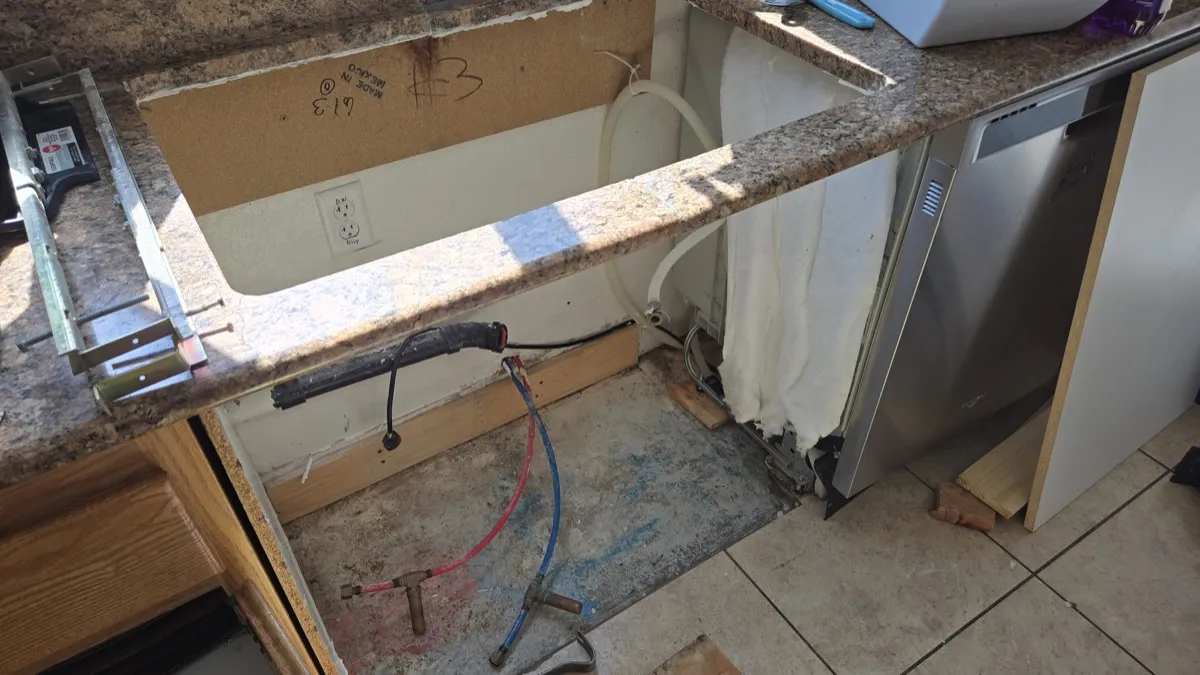
Cabinet box fully removed for remediation access to subfloor and wall cavity
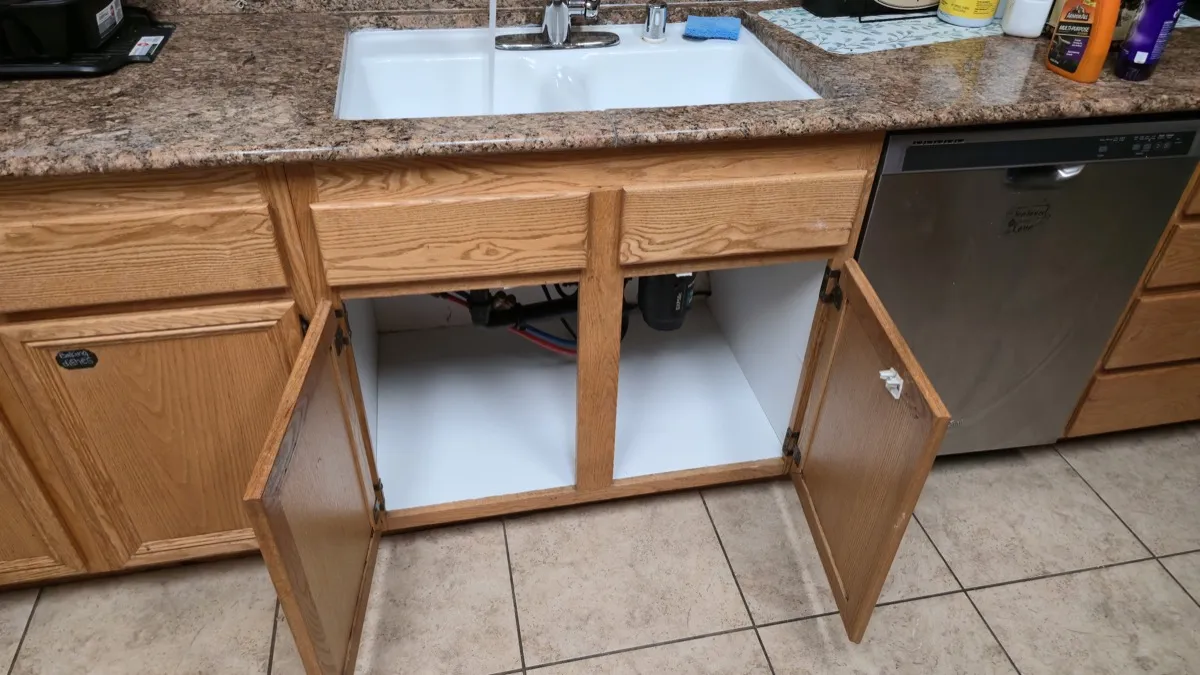
Rebuilt cabinet box with new melamine panels, original oak faces retained for a seamless match
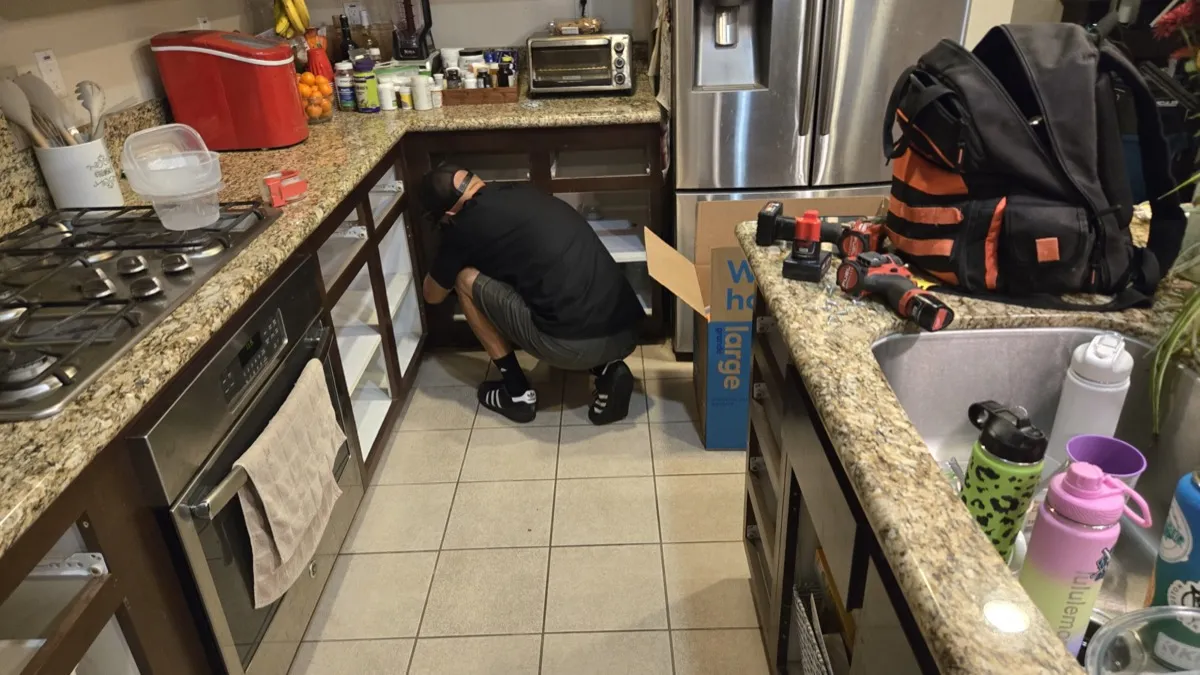
On-site kitchen cabinet rebuild by RCR Environmental — remediation, drying, and reconstruction handled as a single coordinated project
Common Scenarios We See
Slow Drain Leaks
Drain leaks that wet the cabinet base over weeks or months, allowing moisture to saturate materials before the leak is noticed.
Dishwasher Leaks
Water soaking the toe kick and subfloor from dishwasher supply or drain line failures adjacent to the cabinet.
Supply Line Seepage
Supply line or angle stop seepage that doesn’t show until swelling occurs in the cabinet floor or back panel.
Garbage Disposal Failures
Disposal leaks that saturate the cabinet box and wall behind, often compounded by trapped food debris and moisture.
Previous “Cleanup”
Earlier cleanup attempts that left moisture trapped inside the assembly—leading to regrowth and ongoing odor.
Kitchen Cabinet Remediation
Remediate What’s Affected, Rebuild What’s Damaged
A full kitchen replacement is often unnecessary. We correct the moisture source, remediate impacted materials, rebuild the cabinet box interior, and retain existing faces when feasible for a near-identical finish.
Why RCR Environmental
Kitchen cabinet issues are the worst kind of “small leak”—because they cause hidden damage and expensive guesses. With RCR Environmental, you get:
- A moisture-first approach: drying + remediation, not cosmetic patching
- A practical rebuild strategy that often avoids full cabinet replacement
- Professional documentation and clear scope (especially helpful for insurance scenarios)
- A team that understands both remediation methods and reconstruction realities
Frequently Asked Questions
Can you save my cabinets after an under-sink leak?
Often, yes—especially when the faces are intact. We can frequently rebuild the cabinet box and interior while retaining the visible exterior for a near-identical match.
Why do cabinets smell even after I clean them?
Cabinets trap moisture in enclosed spaces. Odors often come from wet materials behind the cabinet base, toe kick, drywall, or subfloor—not just the surface you can wipe.
Do you handle the rebuild after remediation?
Yes. When the scope requires it, we remediate affected areas and then rebuild the cabinet box so the kitchen is functional again—often in a single project.
Will this prevent the problem from coming back?
Long-term success depends on correcting the leak and drying materials properly. Our process focuses on source control, drying, and remediation so you don’t rebuild over hidden moisture.
Not Sure If It's Mold or Just Water Damage?
If you have odor, staining, or swelling, the best first step is to map moisture and confirm conditions. Start with a professional inspection and we'll determine whether you need:
- Drying and rebuild only
- Remediation + rebuild
- Containment/negative air due to contamination risk
- HVAC or whole-home decontamination if odors or airflow distribution are involved
Dehumidification & Drying
Cabinet assemblies often need professional drying before rebuild can begin.
Mold Abatement & Removal
Targeted removal when mold growth is present alongside moisture damage.
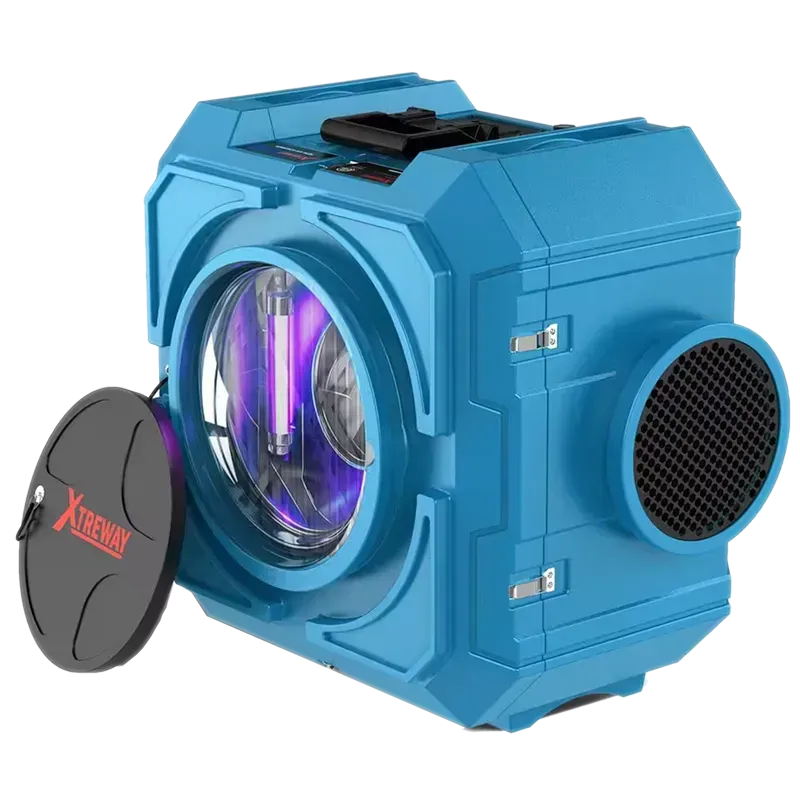
Containment & Negative Air
When removal work could spread particulates to clean areas of the home.
Transport & Disposal
Safe handling of contaminated cabinet materials removed during remediation.
HVAC & Duct Decontamination
When cabinet moisture has affected nearby HVAC returns or ductwork.
Post-Remediation Clearance
Lab-certified verification before cabinet rebuild begins.
Related Services
Kitchen cabinet remediation is one part of a complete approach. Explore our related services.
Water Damage Restoration
Emergency response for plumbing leaks, dishwasher failures, and other water events that affect kitchen cabinets.
Mold Remediation
Full remediation process from assessment through clearance — cabinet repair can be included as part of qualifying projects.
Mold Inspection & Testing
Visual assessment, infrared screening, and moisture mapping to identify hidden mold behind and underneath kitchen cabinets.